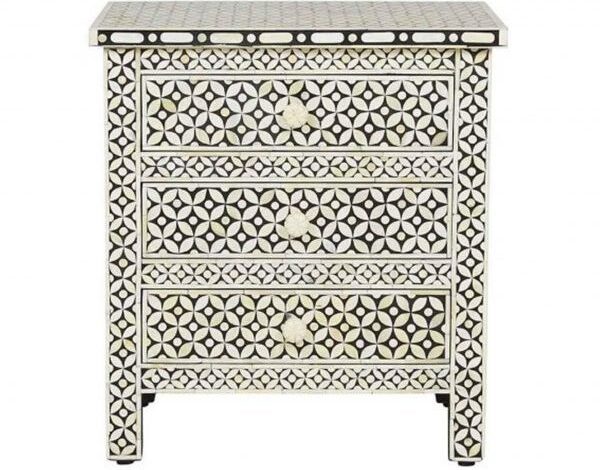
We all want to look our home to be beautiful and love decorating our homes with unique Furniture, but sometimes it cannot be easy to find something functional and beautiful. Bone inlay furniture is perfect for anyone wanting something unique and elegant for their home. With so many bone-inlay furniture options available, you are sure to look for precisely what you are looking for! Bone inlay furniture comprises camel bones or mother of pearl, which brings authenticity and beauty to Furniture. We provide bone-inlay Furniture of many types, such as bone-inlay dresses, tables, bone-inlay nightstands, bone-inlay side tables, end tables and many more.
Our artisans are known for their great carving and elegance in their hands; our Furniture is handmade by Rajasthani artisans. We have a classic luxury store in Udaipur .as well as we want to spread the beauty of artisans to other countries, so we also have stores in USA and Australia.
What is bone inlay furniture?
Bone Inlay is a process that uses animal bones and other materials such as ivory to create richly detailed patterns on wood surfaces. Creating bone inlay furniture begins with artisans carving small spaces into blocks of mahogany, oak, walnut and more.
- They then fill these gaps with fine shavings (or “inlays”), usually made of animal bones or teeth, which are then used as a final change. Today, bone-inlay Furniture is an elegant and luxurious addition to any home!
Why is Furniture with bone inlays popular?
Bone inlay furniture and home decor are becoming increasingly popular because of their durability and elegance. Bone inlays allow you to create beautiful patterns that will make any room in your home look more elegant, especially with wood stain or lacquer colouring. The bone also protects against scratches by providing an extra layer of protection! There are many reasons for the increasing popularity of bone inlay furniture, including history, durability, longevity, variety, and high quality.
What is the story of bone inlay furniture?
Bone inlay designs were first used by ancient early humans who adorned themselves with small objects such as shells, stone fragments, or claws after hunting wild animals such as deer. Over time, people began making more elaborate items out of these decorative objects, eventually leading to bone inlays carved into wooden surfaces.
- Bone is used for its durability, hardness, flexibility, and Lustre and can also be polished to assorted colours. Bones can be cut into thin strips and glued to wooden surfaces. Some fluids for Protective treatments such as lacquer or varnish can also be applied to avoid scratches or damage.
- Bone inlaid Furniture has been around for thousands of years and has been extremely popular among contemporary Furniture due to its rich history.
Is bone inlay furniture solid and durable?
Bone inlay furniture is man-made beauty, a combination of varied materials and techniques that offer a variety of strength and aesthetics without being too cumbersome or difficult to move.
Externally, bone-inlay Furniture is fragile and delicate; However, when carved from durable hardwood and given a deep varnish finish for protection, your bone-inlay furniture will last. Additionally, bone-inlay Furniture remains solid and stable due to its resistance to moisture absorption. Unlike most Furniture, which is made entirely of wood, bone-inlay Furniture is not prone to rot or warping. Its surface is also known to naturally resist wear and tear and other damage, such as scratches or dents caused by improper handling.
- It is also worth the fact that the owner must carefully care for his Furniture with bone inlays. It includes regular cleaning and waxing with recommended products to keep your bone inlay pieces looking their best for future years!
What sorts of designs are included in bone inlay furniture?
Bone inlay Furniture designs are made with intricate designs. Some common themes are whorls with flat patterns, geometric shapes like squares or triangles, twisted ways, or even diamond-shaped pieces placed on top or between diagonal lines without design. It might be nightstands, side tables, dressers, every decor furniture looks beautiful even without designs just by the beautiful carving by artisans.
One of the most popular styles of bone-inlay Furniture is geometric design. This style features patterned lines running through a thick, solid background tone, such as black or brown. The patterns are often dotted with triangular shapes that serve as a border around circular motifs such as flowers and leaves.
Bone inlays are a sign of true artisanship and dedication to art. Intricate designs can take hours of work, days, or even weeks for the artist to create. However, there is no way to measure its uniqueness. Each piece offers you something special that not all other components will have. There are diverse types of bone inlay furniture available in the market, which depend on the artisan and their vision for the Furniture.
Is bone inlay furniture of high quality?
As mentioned above, a bone inlay is one of the oldest woodworking techniques available, dating back 5,000 years. Lucky for us, even today, quality bone inlaid furniture is still made by highly skilled craftsmen working with exotic woods like rosewood and ebony. You can also find bone inlay furniture incorporating materials such as ivory, silver, metal or even pearls.
Final Thoughts
Bone inlay furniture is famous for many reasons. Steeped in history, it has a natural organic beauty that cannot be recreated with other materials and represents the challenging work of skilled craftsmen who created something from nothing. For these reasons and more, it might be a bone inlay nightstand or dresser, or any furniture always has an exciting story to tell about its roots and provenance. If you want beautiful pieces made by traditional artisans that are one-of-a-kind, visit our website or call us.